To leave useful feedback after a guided tour, describe what happened, explain how it affected your experience, and offer a clear suggestion where appropriate. Keep comments specific and fair: focus on the guide’s communication, pacing, group experience, and how well the tour matched its stated description.
This approach suits travelers who want to recognize strong service, raise a concern constructively, or help future guests make informed choices. You do not need to write a long review. A few precise details are usually more useful than broad praise or criticism.
In this guide 8 topics
Choose the right channel
For a private concern, contact the provider through its stated customer-service channel. For feedback intended to inform other travelers, use a relevant public review platform if you choose. Check the provider’s or platform’s current instructions before sending a formal complaint or request, since processes can vary.
If an issue needs prompt attention during the tour, raise it with the guide or provider when it is practical and safe to do so. Afterward, write down the details while they are still clear. You can still share a considered account later.
Build feedback around specific observations
Start with the parts that mattered to your experience. Choose details that a provider or prospective traveler could understand and act on.
- Expectations: Say whether the tour matched the description you saw when deciding to book. Refer to the specific expectation rather than assuming every traveler interpreted it the same way.
- Guide communication: Describe whether instructions, explanations, and transitions were clear to you. If communication was difficult, mention when or why.
- Pacing and comfort: Explain whether the pace felt manageable for you and how breaks or transitions affected the experience. Avoid presenting your personal preference as a universal standard.
- Group dynamics: Note relevant interactions or how the group’s size and behavior affected your experience, without identifying other travelers unnecessarily.
- What worked: Name a helpful action, well-explained topic, or considerate adjustment. Specific recognition gives the provider useful information too.
- What could improve: Describe one change that might address the issue, if you can suggest one.
Use a clear, balanced structure
A practical format is: what you expected, what you experienced, how it affected you, and what would have helped. Include a positive detail when it is relevant, but do not force praise to balance a serious concern.
Illustrative example: “I expected regular explanations during the walk. The guide gave clear introductions at the start and end, but I could not hear several instructions while the group was moving. A quieter stopping point for those instructions would have helped.” This example is a writing model, not a report about a particular tour.
Separate what you observed from what you inferred. “The group waited about 20 minutes after the stated meeting time” describes an observation if you know the timing. “The operator does not respect guests’ time” assigns a broader motive or pattern that one experience may not establish.
Keep claims accurate and considerate
Write from your own experience. If another traveler’s comment influenced your view, distinguish that from what you personally saw. Avoid sharing private details, naming other guests, or making claims you cannot support.
Be direct without turning a specific problem into a sweeping judgment. “I found the pace challenging because there were few pauses” is more informative than “This tour is bad.” Other travelers may have different comfort levels, expectations, and needs.
Mistakes and limitations
- Being too vague: “Great guide” or “poor organization” gives little context. Add one concrete detail.
- Writing while upset: Draft notes first, then review them before posting. Keep important facts; remove insults and assumptions.
- Expecting one comment to prove a pattern: Feedback describes an individual experience. It cannot establish how every departure or traveler will be treated.
- Mixing separate issues: If you have concerns about both the guide and the booking process, explain them separately so each can be understood.
- Assuming a response or outcome: A provider may have its own process for handling feedback. Do not assume a public post will resolve a private complaint.
Quick checklist before sending
- Have I described what I personally experienced?
- Have I included enough detail to make the point clear?
- Have I separated facts from impressions?
- Have I explained how the issue affected my tour?
- Have I avoided unnecessary personal details about other travelers?
- Am I using a channel that fits my goal?
Frequently asked questions
How long should feedback be?
Use enough words to explain the relevant experience and its impact. A short, specific note can be more helpful than a long account that repeats the same point.
Should I mention both good and bad parts?
Yes, when both mattered to your experience. Balanced feedback does not mean treating every positive and negative detail as equally important. Describe each accurately.
What if my concern involves a personal or sensitive matter?
Consider contacting the provider privately through a channel it identifies for customer concerns. Share only details needed to explain the issue, and check the provider’s current process if you want a response or follow-up.
Next step
Before sending your feedback, write down one expectation, one or two observed details, and the effect they had on you. Then choose a private or public channel based on your purpose and review your wording for accuracy.
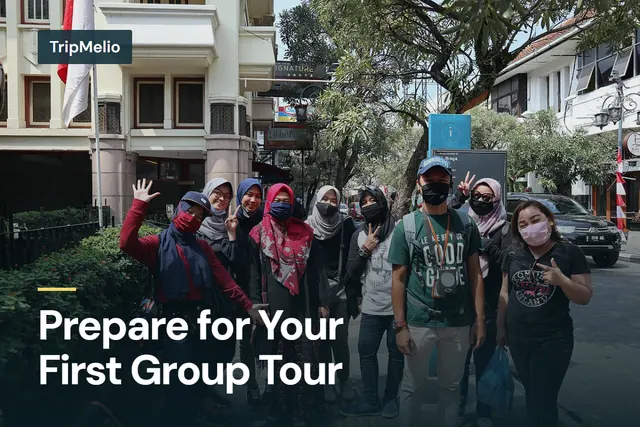
Featured photo: Pay as you wish Walking Tour in Bandung Indonesia.jpg by Bandung Good Guide / CC BY-SA 4.0. Cropped and resized. Editorial title added.