To prepare for your first group tour, choose an itinerary that fits your pace and comfort level, understand what the tour includes, and plan for less control over daily timing. Group travel can simplify logistics and create social opportunities, but it also asks you to share decisions, space, and time with other travelers.
Start by reading tour details closely. Then assess your travel habits, ask practical questions, and prepare for both organized activities and personal downtime.
In this guide 11 topics
Who first-time group tour advice suits
This advice suits travelers who want help with planning, transportation, activities, or social connection without arranging every detail alone. It can also help independent travelers who are curious about group travel but want to understand its trade-offs first.
A group tour may suit you if you value a clear schedule, shared experiences, and support with logistics. It may feel less comfortable if you need complete control over timing, prefer extended solitude, or dislike changing plans around other people.
1. Match tour style with your travel habits
Tour formats vary. Some emphasize a full schedule and frequent movement. Others leave more free time or focus on one place. Compare the itinerary with your normal energy level, sleep preferences, mobility needs, and interest in organized activities.
- Check how often the itinerary changes location.
- Look for free time between scheduled activities.
- Consider whether early starts or late finishes fit your routine.
- Review the expected group size if that information is provided.
- Check whether the tour centers on activities you genuinely want to do.
Illustrative example: a traveler who enjoys structure may prefer a fuller schedule, while someone who needs quiet time may choose an itinerary with open afternoons. These are planning examples, not universal rules.
2. Read inclusions and exclusions carefully
Do not judge a tour only by its headline itinerary. Identify what the provider says is included, what remains your responsibility, and which details are unclear. Terms differ by provider, so confirm current information directly before booking.
- Accommodation arrangements and room-sharing terms.
- Transportation listed in the itinerary.
- Meals, activity fees, and admission costs.
- Free-time expenses and optional activities.
- Travel insurance, visas, permits, and personal documents.
- Booking, cancellation, payment, and change terms.
Missing information does not prove that an item is excluded. It means you need clarification. Save the provider’s written answers with your booking records.
3. Ask questions before you commit
Good questions expose fit problems before departure. Ask the provider for current, specific answers rather than relying on assumptions.
- What does a typical day involve?
- How much walking, standing, or carrying should travelers expect?
- How much personal time is normally available?
- How are room assignments handled?
- What happens if a traveler skips an activity?
- How does the group handle delays, illness, or itinerary changes?
- Which documents, health requirements, or entry rules must travelers confirm?
For accessibility, health, insurance, entry, transport, or safety questions, confirm details with the relevant official authority and provider. Requirements can change and may depend on personal circumstances.
4. Prepare for group dynamics
Group travel works through compromise. People may differ in punctuality, conversation style, food preferences, activity levels, and expectations about personal space. You cannot control every group interaction, but you can set clear boundaries and communicate early.
- Arrive on time for agreed departures.
- Tell the tour leader promptly about important needs or concerns.
- Respect shared rooms and common areas.
- Allow other travelers different preferences.
- Use free time for activities you do not want the group to share.
- Keep essential personal items accessible during travel days.
You do not need to become highly social to enjoy a group tour. Friendly conversation can coexist with polite requests for quiet time.
5. Plan a flexible packing approach
Pack for the documented itinerary and your own needs, not for every imagined situation. Choose items that support movement, changing plans, and access to essentials. Check the provider’s luggage guidance and any current carrier rules that apply to your journey.
- Keep travel documents and required medicines easy to reach.
- Pack clothing that works across the activities listed in the itinerary.
- Bring a small day bag if the schedule separates daily essentials from larger luggage.
- Carry backup contact details and important booking information.
- Leave room for changes in plans and local purchases.
Do not assume that a tour removes the need to prepare. Providers may organize transport or activities, but personal documents, insurance decisions, medication planning, and suitable clothing remain your responsibility.
6. Set expectations for time and money
A listed tour cost may not cover every expense connected with travel. Build your own budget from confirmed inclusions and personal assumptions. Separate required costs from optional spending so you can make informed choices.
- Required travel documents or entry-related costs, where applicable.
- Transport to and from the tour start and end points.
- Meals or activities not listed as included.
- Personal spending and communication costs.
- Insurance and contingency funds.
Use provider terms as the source for tour-specific costs. Do not treat a sample budget as a market average or a promise of savings.
Common first-tour mistakes
- Choosing an itinerary because destination names sound appealing without checking pace.
- Assuming every activity is optional or every activity is included.
- Ignoring room-sharing or personal-time details.
- Keeping concerns private until they disrupt the group.
- Overpacking for possibilities the itinerary does not mention.
- Relying on old information for rules, schedules, or provider terms.
Group tours cannot guarantee perfect companions, unchanged plans, or a travel style that matches every preference. They also do not remove normal travel uncertainty. Use current provider information and official requirements for decisions that depend on dates, destinations, or personal circumstances.
First group tour checklist
- Compare itinerary pace with your energy and comfort needs.
- Confirm inclusions, exclusions, room arrangements, and free time.
- Review payment, cancellation, and change terms.
- Ask about walking, luggage, accessibility, and daily routines.
- Check official requirements for documents, health, insurance, and entry.
- Prepare essential documents, medicines, contacts, and flexible clothing.
- Set a personal spending plan based on confirmed information.
- Plan how to communicate boundaries respectfully.
Frequently asked questions
Should first-time travelers choose a group tour?
A group tour can suit first-time travelers who want structure or support with logistics. It is not automatically the best fit. Compare the schedule, group format, personal-time options, and provider terms with your own preferences.
How social must I be on a group tour?
You can participate at your own social level while respecting group commitments. Join shared activities, communicate clearly, and use available personal time when you need a break.
What should I confirm before booking?
Confirm the itinerary, inclusions, exclusions, accommodation arrangements, expected physical demands, personal-time options, booking terms, and any current official requirements relevant to your trip.
Next step
Take one tour itinerary you are considering and mark each day as structured, flexible, or unclear. Then ask the provider about every unclear item before you decide. For more information about how travel guides are prepared, see How We Research Travel Guides.
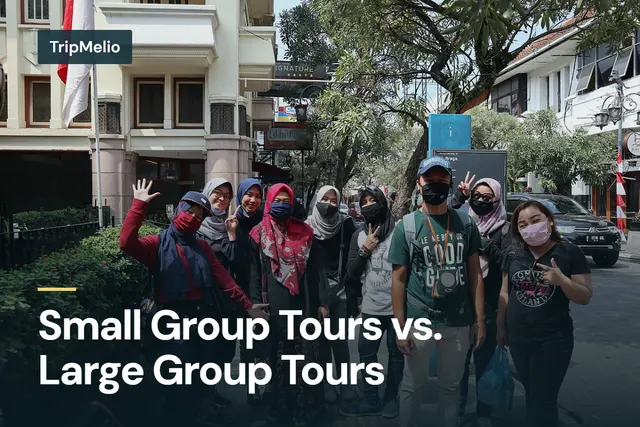
Featured photo: Pay as you wish Walking Tour in Bandung Indonesia.jpg by Bandung Good Guide / CC BY-SA 4.0. Cropped and resized. Editorial title added.