Choose a small group tour if you value closer interaction and a more intimate group setting. Choose a large group tour if you prefer a bigger social mix or a more structured experience. Group size alone does not determine quality: compare the specific itinerary, pace, inclusions, and provider terms.
In this guide 7 topics
Who each tour style may suit
Small group tours may suit travelers who want more chances to ask questions, talk with fellow participants, or move through activities as a smaller group. They can also appeal to people who find large crowds tiring. These are possibilities, not guarantees. The actual experience depends on the operator, guide, itinerary, and group.
Large group tours may suit travelers who enjoy meeting a wider range of people or want a clearly organized schedule. They may be a practical fit for travelers who prioritize listed inclusions and a set format over an intimate group dynamic. Confirm how the tour handles questions, breaks, and group movement.
Compare the details that shape the experience
Group size and interaction
Check the maximum group size, not only the label “small group.” Providers may define that term differently. Ask whether the stated limit applies to the whole tour, a vehicle, or a particular activity. For larger groups, look for details about audio arrangements, meeting points, and how the guide keeps participants together.
Pace and itinerary
Read the schedule for time spent at each stop, free time, walking, transfers, and transitions. A smaller group does not automatically mean a slower pace, and a larger group does not automatically mean a rushed one. If you need a particular pace, ask the provider directly and get the answer before booking.
Included services and booking terms
Compare what each listed price includes, such as transport, admission, meals, or equipment, without assuming that tours with different group sizes include the same things. Review cancellation terms, minimum participation requirements, meeting instructions, and any stated restrictions. These details vary by provider and booking.
Illustrative examples
Illustrative example: A traveler who likes asking frequent questions may prefer a tour with a lower group limit and clear opportunities to speak with the guide. They should still verify the group cap and tour format.
Illustrative example: A traveler who enjoys meeting many people and is comfortable following a set schedule may prefer a larger group. They should check how the provider handles stops, headcounts, and time for questions.
Common mistakes and limitations
- Choosing by label alone. “Small group” has no single meaning across providers. Confirm the maximum size.
- Assuming smaller means more flexible. A small tour can still follow a fixed route and schedule.
- Assuming larger means less personal. Guide approach and tour design also shape interaction.
- Skipping the terms. Cancellation, minimum participation, and included services can differ.
- Expecting a guaranteed group dynamic. Participants and conditions can vary from one departure to another.
Quick decision checklist
- What is the maximum group size, and how is it defined?
- Does the itinerary match your preferred pace and level of structure?
- How much time is set aside for questions, breaks, and independent time?
- What services are included, and what costs or arrangements are separate?
- What are the cancellation and minimum participation terms?
- Can the provider confirm any specific access or participation needs?
Frequently asked questions
Are small group tours always better?
No. They may fit travelers seeking a more intimate group, while others may prefer the social mix or structure of a larger tour. Compare the specific experience and terms.
Are large group tours less flexible?
Not necessarily. Flexibility depends on the itinerary and provider. Check the schedule and ask what changes, if any, are possible.
What should I ask before booking?
Ask for the maximum group size, the tour’s pace, what is included, and the applicable booking terms. If a specific need matters to you, request a clear answer from the provider before booking.
Next step
Shortlist tours by itinerary and terms first, then use group size to choose the setting that best matches your travel style. For more detail on our editorial approach, read How We Research Travel Guides.
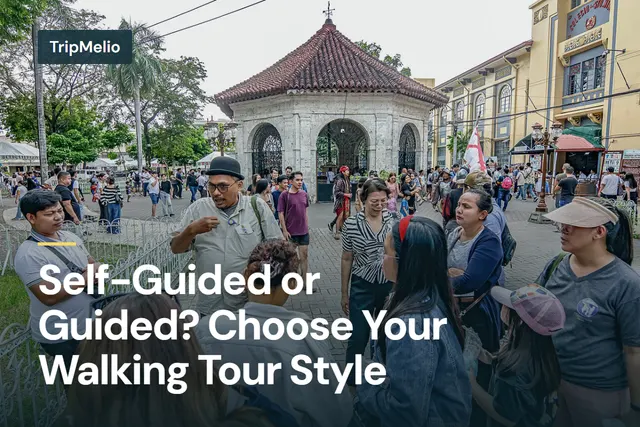
Featured photo: Pay as you wish Walking Tour in Bandung Indonesia.jpg by Bandung Good Guide / CC BY-SA 4.0. Cropped and resized. Editorial title added.